
Christopher Piercecchi, MD
Physician and Wellness Manager, Founder, The Men’s Clinic for Wellness & Vitality
This SITREP is for educational purposes and reflects a review of publicly available research. It is not medical advice and does not replace an evaluation by your physician, including for the diagnosis or treatment of sleep disorders.
When WHOOP was still a new and expensive device marketed primarily to serious athletes, I was one of the early adopters. Back then, you purchased the device outright for about $500, and there was no monthly subscription. I wore it faithfully for years.
At the time, I was spending long days and late nights in the hospital, often working punishing weeks and sometimes getting only two or three hours of sleep. Later, I used the strap during my runs and workouts. Every morning, the first thing I did was check my recovery score and scroll through all the data. It became a ritual.
Then I got on with my day and forgot nearly everything it had told me.
I soon realized that I was consuming the data, the scores and assessments it provided me, but I wasn’t really doing much with that information. I never saw a poor recovery score and decided not to train. My heart-rate variability never meaningfully influenced a workout. The sleep data was interesting, but it changed nothing. When WHOOP eventually moved to a subscription model, I decided paying a monthly fee wasn’t worth it to me. What would I be paying for? Interesting data to look at and do nothing with? Looking back, I realized that I had worn the thing every day for years and received almost nothing from it beyond a steady stream of entertaining numbers.
I wore the thing every day for years and got almost nothing from it beyond a steady stream of entertaining numbers.
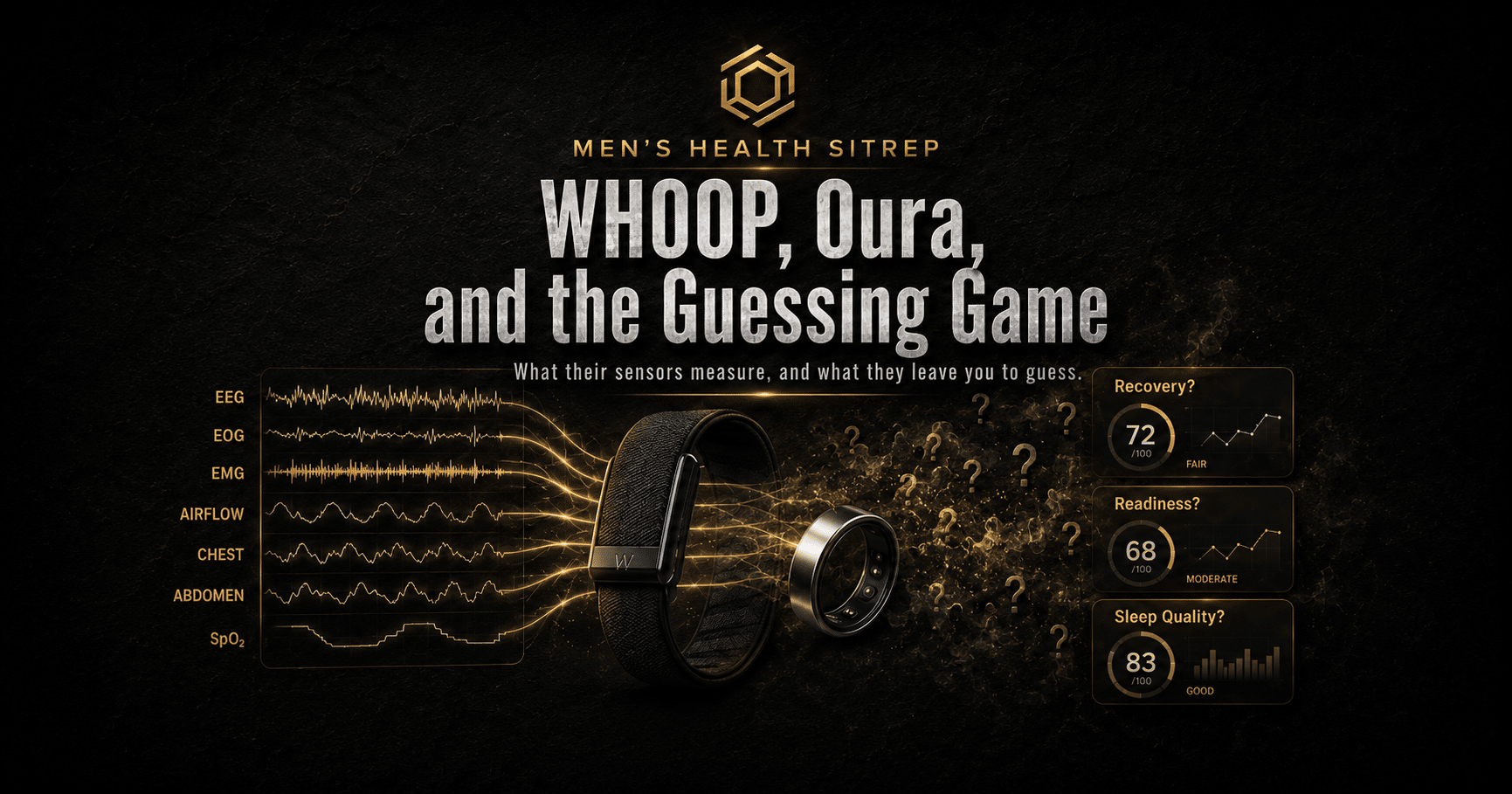
That is the marketing genius behind devices like WHOOP and the Oura Ring. They convince us that we need to know whether we are “recovered”, how much REM sleep we obtained, and whether our bodies are ready to exercise. But are they really measuring those things? And more importantly, do we actually use the data to better our health and performance?
What Are These Devices Actually Measuring?
Have you ever wondered whether these things are actually giving you real and accurate information? What are they actually monitoring?
They claim to be able to assess your sleep. I have patients who swear by the daily sleep data and believe they are receiving comprehensive, high-quality sleep information comparable to what they would get from a sleep study. I even had a patient once who refused to believe the results of an actual medical-grade sleep study that diagnosed him with sleep apnea. He told me the study was wrong because his Oura Ring said he slept well.
Yeah, seriously. True story.
Back to All Blogs