
By Christopher Piercecchi, MD — Physician and Wellness Manager, Founder, The Men’s Clinic for Wellness & Vitality
SITREP is an evidence-based review briefing for patients and colleagues at The Men’s Clinic for Wellness & Vitality. It is educational and does not constitute individualized medical advice.
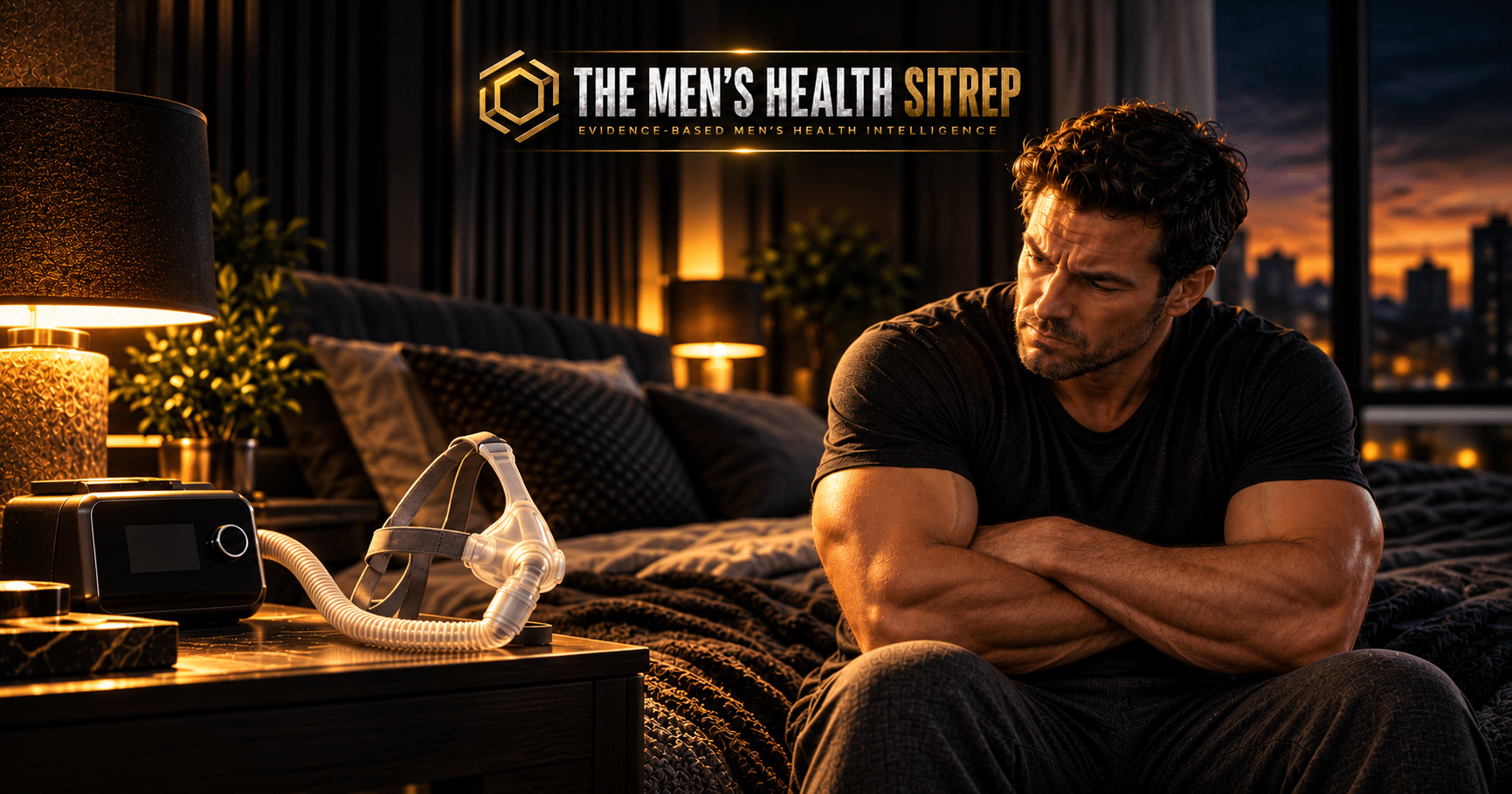
Doc, I Don’t Want to Wear That Mask. I hear that every so often from a man who has just been diagnosed with obstructive sleep apnea, and I understand it. Wearing a mask to bed isn’t particularly appealing. But let’s put that inconvenience into perspective. Since when did liking a medical treatment become a prerequisite for accepting it?
Imagine being diagnosed with cancer. Would you dismiss treatment because you disliked IVs, hospital gowns, or the inconvenience of going through it? You would want to understand the risks, benefits, and options, but you would recognize that the seriousness of the condition matters more than whether you find the treatment appealing. Sleep apnea isn’t cancer, but the principle is the same.
Most men would agree with that when the diagnosis is cancer. The trouble starts when the diagnosis sounds less frightening and the treatment is more of a nuisance than an ordeal. Some people refuse even lifesaving treatments. People continue smoking despite understanding the consequences, and others refuse necessary medications because they feel fine or are convinced that something bad won’t happen to them. Human beings are remarkably good at convincing themselves that medical risks apply to everyone else.
Sleep apnea makes that kind of thinking easy. After all, you’re asleep when it’s happening, and you may feel perfectly fine during the day. But your airway is repeatedly collapsing, your oxygen levels may be falling, and this continues night after night whether you’re aware of it or not. Untreated sleep apnea is associated with hypertension, atrial fibrillation, stroke, heart failure, and increased risk of premature death. CPAP effectively treats the breathing obstruction when used. It doesn’t guarantee that you’ll avoid every cardiovascular complication, but it directly addresses a documented medical problem.
That kind of thinking leads to something I see far too often: men who approach their health like a buffet. They enthusiastically follow the recommendations they like while ignoring those they find inconvenient. They’ll exercise, take supplements, and monitor their biomarkers, yet refuse to address a significant medical condition because they don’t like the recommended treatment. But optimizing your health doesn’t work that way. You can pick and choose which treatments you’re willing to accept. What you cannot do is make the associated health risks disappear because you don’t like the treatment.
None of this means you have to accept every recommendation without question. There’s nothing wrong with asking questions or challenging medical recommendations. In fact, I encourage it. But there’s a particular kind of stubbornness that becomes an obstacle to good health: deciding that no amount of medical evidence could ever change your mind. So let me ask you something. Are you really willing to leave a known, treatable medical condition untreated, with all its consequences, because you don’t like wearing a mask?
Before you answer, I want to be clear about who I’m talking to. I’m not criticizing men who have genuinely tried CPAP and struggled with it. Discomfort, mask leaks, claustrophobia, and difficulty adjusting are legitimate problems, and most of them have practical solutions: a different mask style, a pressure ramp or humidification adjustment, a gradual period of getting used to it, and for the right patient an oral appliance, a nerve stimulator, or treatment of the excess weight that is driving the obstruction. If CPAP isn’t working for you, tell your doctor what is going wrong so it can be fixed, instead of quietly stopping.
I’m talking about the reflexive refusal, the man who dismisses treatment before making a serious attempt. Saying “I don’t want to” is not a rational or mature way to approach a serious medical condition. It is an emotional reaction to an inconvenience, not a thoughtful assessment of the medical consequences. Disliking a treatment is understandable, but letting that dislike make the decision without weighing the evidence and the risks is another matter. Good decisions about your health, like good decisions anywhere else in life, require the discipline to set aside your immediate emotions and think clearly about what is at stake. You need to separate what you feel about a treatment from what you know about the medical condition.
Ultimately, the decision is yours. You have every right to refuse treatment. But make sure you’re evaluating the actual consequences of that decision rather than reacting to the inconvenience of wearing a mask.
Bottom Line
You don’t have to like the mask. You don’t have to like my recommendation. But you need to take the medical condition seriously enough to make an informed, adult decision about it.
It’s time to get over the mask.
If you know a man who has been diagnosed with sleep apnea and refuses to use his CPAP, send him this. If you are that man, think about the consequences of your decision.
Don’t think you have sleep apnea? Read “You Don’t Think You Have Sleep Apnea.”
Back to All Blogs