
By Christopher Piercecchi, MD
Disclaimer: This article is educational and is not individualized medical advice, and it should not be used to diagnose or treat any condition.
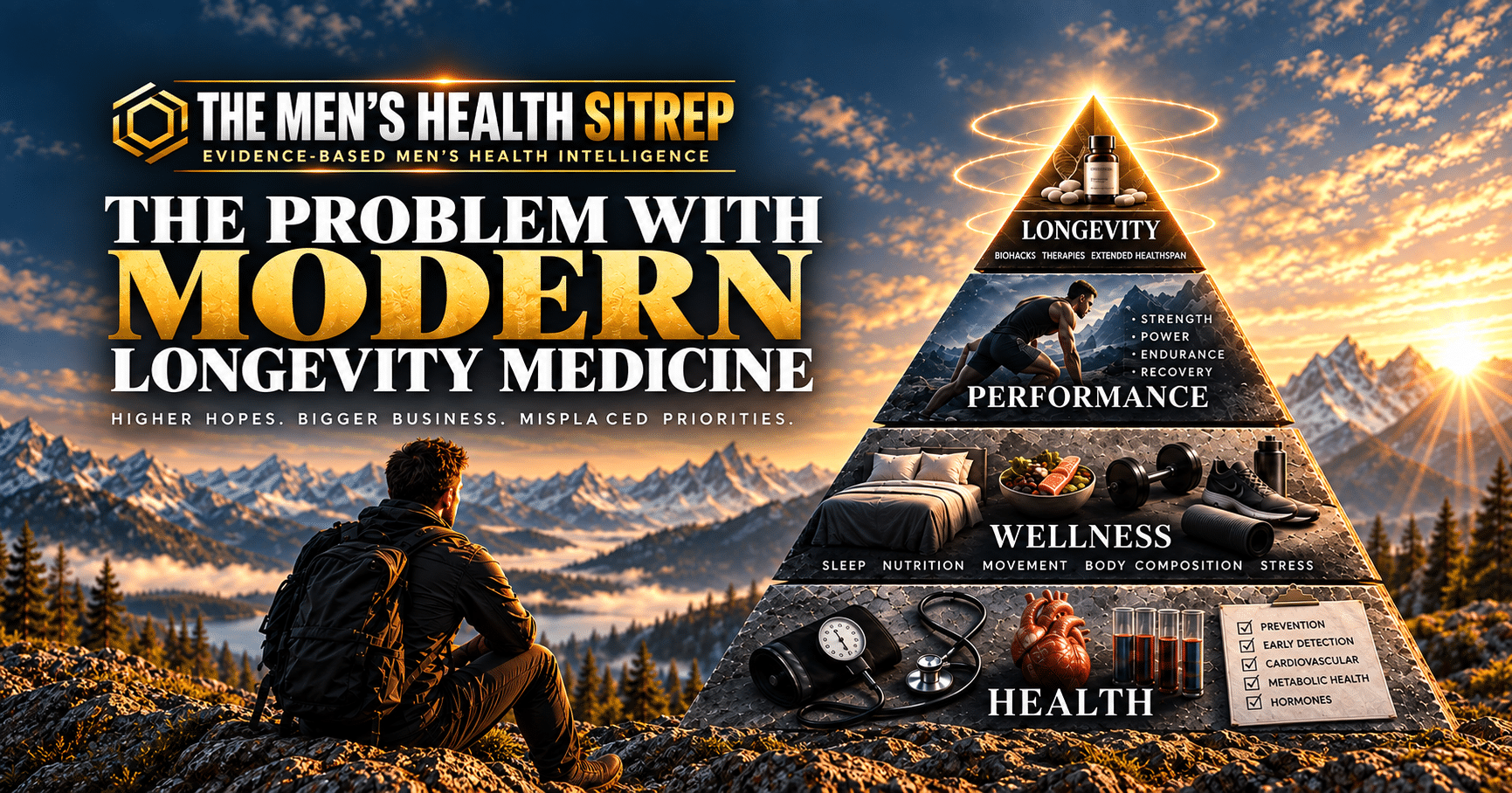
Longevity has become a marketplace. Supplements, peptides, devices, biological-age tests, and repurposed drugs flood the market, promising to affect aging and help us live longer or stay healthier as we get older. Some of the science behind this is interesting, and some of it may eventually prove useful. My problem isn’t with studying aging or looking for better ways to extend lifespan. My problem is that far too many people have made this the starting point and believe these hacks are the important parts of health and wellness.
I see men all the time who exercise, look reasonably fit, feel fine, and are convinced that they are healthy. Many are deeply interested in longevity and are already pursuing supplements, therapies, or other interventions they believe will improve their health or extend their lives. Yet many have never established their actual baseline health or identified the risks most likely to determine their health over the next ten or twenty years. They are trying to optimize their health before they have adequately measured it.
Back to All Blogs