
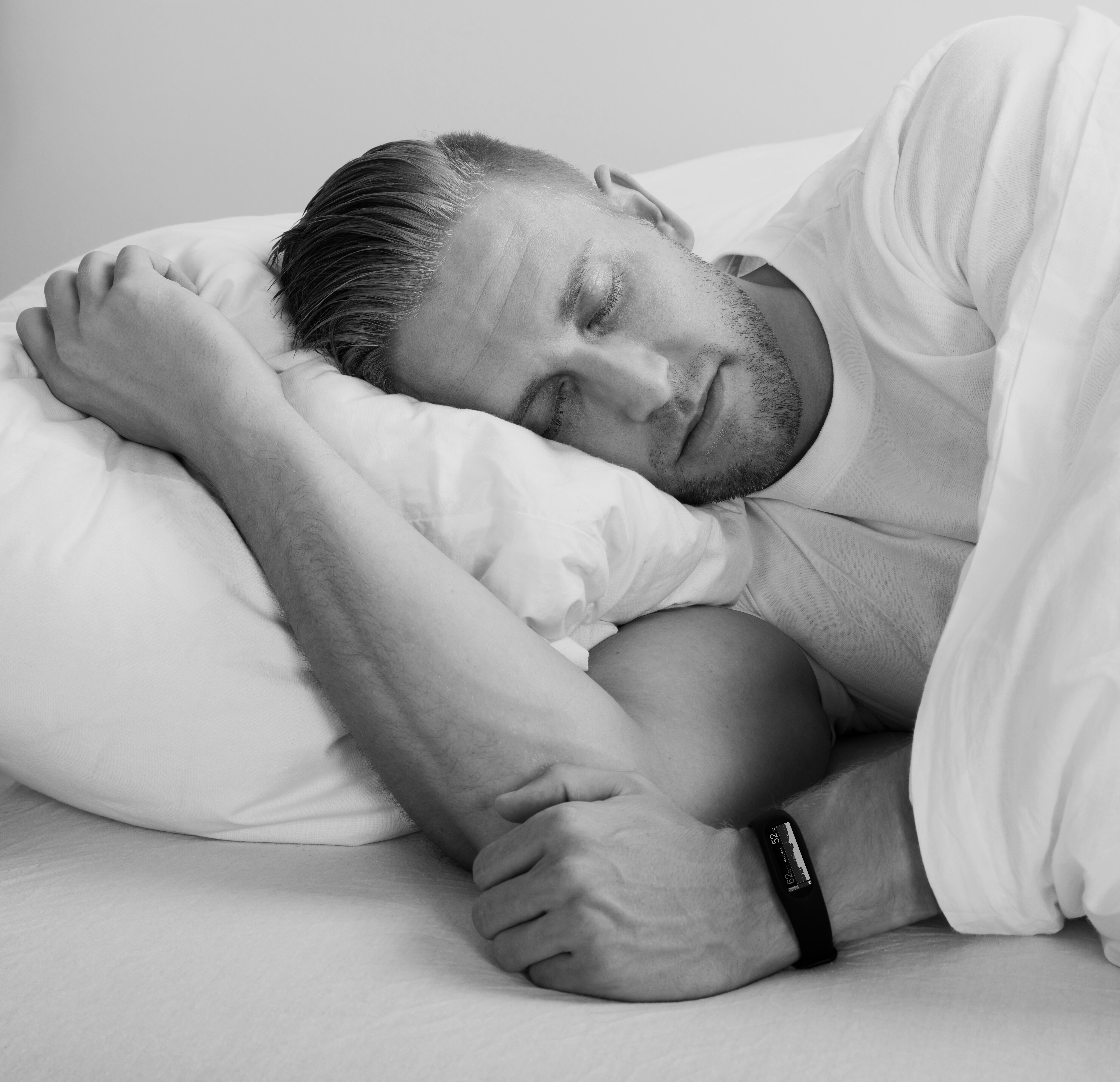
Most men, and even many physicians, only think about severe obstructive sleep apnea: the man who snores like a chainsaw, wakes up choking, and nods off during the day. Those patients are easy to identify, and sleep doctors focus heavily on them. But sleep-disordered breathing isn’t black and white. It exists on a spectrum, and millions of men live in the gray zones — hypopneas, subtle arousals, and upper airway resistance — that go unrecognized and untreated.
The Full Spectrum of Sleep-Disordered Breathing
Sleep disruption takes several forms:
- Apnea: a complete or near-complete pause in airflow lasting at least 10 seconds, usually with oxygen desaturation and an arousal.
- Hypopnea: a partial reduction in airflow that still disturbs sleep and drops oxygen.
- Respiratory Effort–Related Arousal (RERA): increased breathing effort that doesn’t meet the threshold for apnea or hypopnea, but still fragments sleep.
Most sleep studies emphasize the Apnea–Hypopnea Index (AHI), which counts events per hour. Mild sleep apnea is defined as 5–15, moderate as 15–30, and severe as above 30. But when physicians only look at AHI, they often miss the larger picture. The Respiratory Disturbance Index (RDI) adds RERAs, capturing subtle but important disruptions. Men with a “normal” AHI can still have a high RDI, leaving them symptomatic despite a “negative” test.
Why Mild or Moderate Disruption Still Matters
Sleep isn’t just about duration, it’s about depth and continuity. Even mild sleep-disordered breathing can wreak havoc:
- Fragmented sleep impairs performance. Repeated arousals prevent restorative slow-wave and REM sleep, degrading focus, mood, and reaction time.
- Metabolic and cardiovascular risk increases. Large cohort studies have shown that even mild sleep apnea is associated with higher rates of hypertension, atrial fibrillation, insulin resistance, and stroke.
- Hormones take a hit. Testosterone secretion, growth hormone release, and cortisol regulation all depend on consolidated, high-quality sleep. Subclinical disruption silently undermines these systems.
The American Academy of Sleep Medicine has acknowledged that sleep-disordered breathing exists on a continuum, and that morbidity is not confined to those with “severe” AHI values. Yet many men never get tested, and those who do may be told their results are “normal” when the reality is anything but.
Why Men Get Missed
- No snoring, no suspicion. Many men with hypopneas or RERAs don’t snore loudly, so neither they nor their partners suspect a problem.
- False reassurance from negative tests. Insurance-driven home sleep studies often underestimate disease burden because they are designed to detect only overt apneas.
- Adaptation to poor sleep. Men often believe their sleep is “fine” simply because they don’t know what restorative sleep feels like. Chronic fatigue becomes their baseline.
The Wearable Trap
One more reason so many men go undiagnosed: false reassurance from wearables. Devices like Oura rings and Whoop straps provide useful data on heart rate, activity, and general sleep timing. But the sleep staging and “sleep scores” they generate are not medical-grade, validated, or approved to diagnose sleep disorders.
Too often, a man will say, “My Oura says I sleep great — I got an 85 last night.” What the device cannot detect are the hypopneas and RERAs that fragment sleep and undermine long-term health. You might feel “fine” because you’ve adapted, and your wearable’s colorful charts confirm it. But adaptation is not the same as optimization. Only formal sleep testing can reveal whether your sleep architecture is intact or silently disrupted.
Depending on a wearable to judge your sleep is like a general relying on a map that leaves out enemy positions, or a pilot flying with gauges that look reassuring but omit the critical instruments. The display gives comfort, but not truth — and the hidden danger remains.
Why We Test Differently
At The Men’s Clinic, we don’t accept a narrow definition of sleep apnea. We look for the full spectrum: apneas, hypopneas, and RERAs. We push for comprehensive testing, not just insurance-limited snapshots. Because fragmented sleep doesn’t just make you tired — it changes your physiology over years, increasing your risk for heart disease, metabolic dysfunction, and cognitive decline.
The truth is, millions of men are walking around undiagnosed. They don’t fit the stereotype, but they suffer from the consequences just the same. And until they experience deep, consolidated sleep, they have no idea what they are missing.
The Bottom Line
Sleep apnea is not just the dramatic case of the obese man with thunderous snoring. It is a spectrum disorder that silently chips away at energy, performance, and long-term health. Severe cases are easy to find; it’s the mild and moderate cases that require vigilance. That’s why we test aggressively, even when traditional thresholds say “wait.”
Because the cost of ignoring sleep disruption is paid slowly, in lost years and diminished vitality. And the benefit of correcting it is immediate, profound, and life-changing.
Back to All Blogs